Troll Digs: A Complete Guide
Initium's first procedurally generated dungeons -- how to find one, how they are built, what lives down there, and exactly what is in the chests.
TL;DR
1. Switch to the Experimental UI -- the Classic and WoW-style UIs cannot draw the 2D map, and without the map you cannot see a dig entrance at all
2. Explore for Natural Resources in a place where trolls live. Aera Countryside has by far the best odds
3. Walk to the entrance on the grid map -- it sits a few tiles up from where you arrive -- and enter it
4. Disband your party before you attack. Instances refuse party mechanics
5. Fight room by room. Cleared rooms stay cleared, permanently
6. Retreat to an Abandoned Miners' Camp to sleep. They are free, safe, and reusable as often as you like
7. Loot every chest. They get better the deeper you go, and about one dig in three ends at a Troll Hoard
One entrance is one dig, forever. Leave and come back tomorrow and it is still there, still half-cleared, waiting.
Something has been digging under Aera.
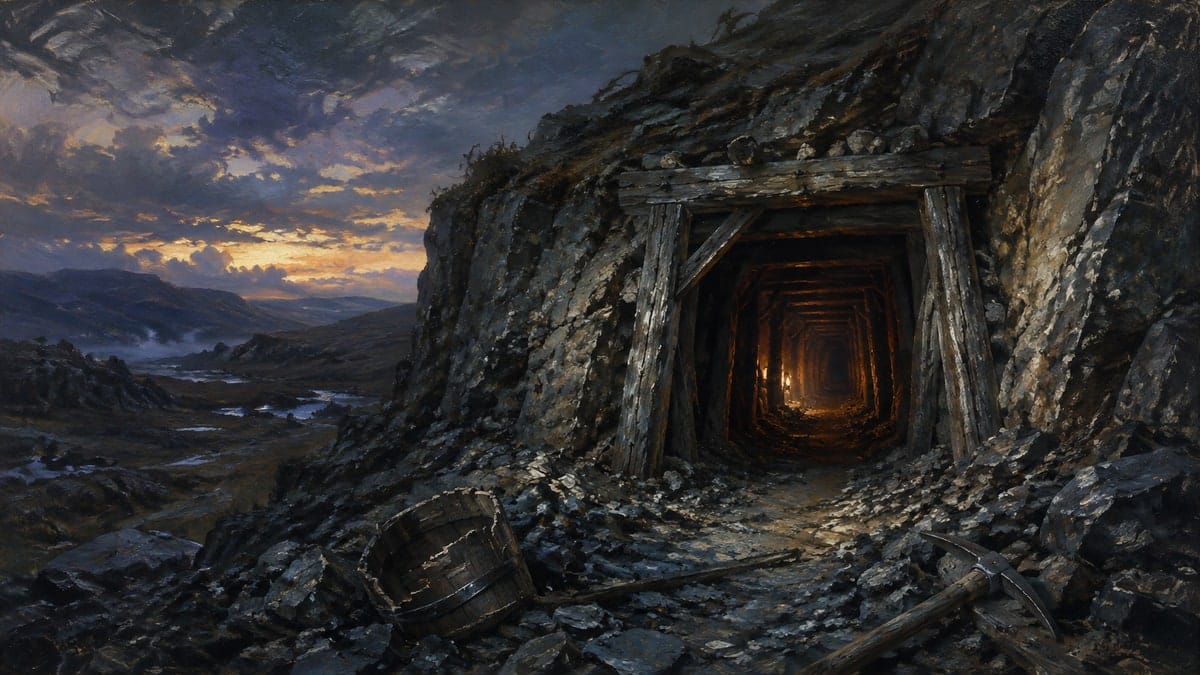
Not the trolls you already know -- the ones that shamble around the Countryside and get cut down by anyone with a decent axe. Something more organised. Somewhere in the hills there are shafts going down, timbered and shored, with sorting floors and tool stores and cook fires. Somebody has been mining down there for a long time, and they have not been doing it alone.
Troll Digs are Initium's first procedurally generated dungeons. They are not one hand-built location like the Troll Caves. Every dig is assembled room by room as you descend, drawn from a pool of hand-authored rooms and stitched together differently every time. Two players standing at two different entrances are walking into two different dungeons.
This guide covers everything: how to find one, how they are built, what lives down there, how the fighting works, and exactly what is in the chests.
Finding a Dig
Dig entrances are not placed on the world map. You have to go looking.
Use Explore in an outdoor location where trolls already spawn, and take the Find Natural Resources result. That drops you into a fresh resource site, and when a resource site is generated the game decides -- once, for that whole site -- whether it contains a dig entrance.
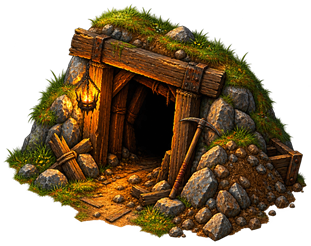
Because the roll happens per site rather than per tile, a site either has an entrance or it does not. There is no scanning a huge map hoping to get lucky in the corner. Look around, and if there is nothing, explore again.
Where to look
Twenty-three outdoor locations can produce a dig -- all of them places trolls already inhabit:
Best odds by a wide margin: Aera Countryside, at roughly 1 site in 10.
Everywhere else, at roughly 1 site in 45: Aera Swamplands, Troll Camp, Volantis Troll Caves, Nors Mountain, Wildeburn Forest, Taelhollow Swamp, Northern Hills, North West Hills, Great Northern Valley, Cliffside Coast, Cliffside Lookout, Meteor Impact Site, Old Volantis Church Ruins, Volantis River, Volantis Countryside, Northern Volantis Coastline, Artius River, Seaside Landing, Stone Tower, Gaping Cave, Overgrown Path, Learning Grounds.
The practical advice is short: hunt in Aera Countryside. It is roughly five times more productive than anywhere else, and it is close to town. The other twenty-two locations exist so that a dig can turn up anywhere trolls do, which is a nice thing to stumble into, but they are not where you go looking on purpose.
There is also a rarer way in. Ordinary combat sites inherit the same chance, so occasionally you will be exploring for a fight and find a dig mouth in the corner of a small 3x3 map instead. That one is pure luck.
You Need the 2D Map
This one catches people out, so it is worth being blunt about it.
Dig entrances only exist on the 2D grid map, and only the Experimental UI can draw it. On the Classic and WoW-style interfaces there is no grid, so there is nothing to render the entrance into and no way to walk over to it. You can be standing in a resource site with a dig in it and never know.
Switch to the Experimental UI before you go hunting. The good news is that resource sites open the 2D view for you automatically the moment you arrive, so once you are on the right interface it just works.
The entrance is deliberately placed a few tiles up from where you land, rather than under your feet. You are meant to look around the site and walk to it. Finding it is part of it.
One Entrance, One Dig
This is the single most useful thing to understand about digs, and it is not obvious.
The first time you enter an entrance, the game generates the dig behind it and then permanently binds that entrance to that dungeon. Every later visit walks into the same dig -- the same rooms, in the same order, with everything you already killed still dead and every chest you already opened still empty.
So a dig is not a run you have to finish in one sitting. It is a place. You can clear three rooms, run out of hit points, log off, and come back tomorrow to a dungeon that is exactly where you left it. Push a little further each time.
The flip side: if you want a new layout, you need a new entrance. Going back to the same one will never reshuffle the rooms. When a dig is exhausted, go find another.
Tip: a dig you have found is effectively yours. The path to the site is recorded per character, so party members each get their own -- and clearing one out over several sessions is a perfectly good way to play it.
How a Dig Is Built
Under the hood there are 63 hand-authored template rooms connected by 124 possible passages. None of the art or the writing is procedural -- every room down there was made by hand. What is procedural is the route.
When you enter, the game builds the entry room and then digs one room ahead of you. Every time you take a passage, it picks the next room from the ones the current room connects to -- weighted, and never immediately back the way you came -- and builds that. The dungeon is always exactly one room deeper than you have seen.
Eventually you reach a room with nowhere onward, and that is where the dig ends. There is also a hard ceiling of 12 rooms.
How deep do they actually go?
Simulating the real room graph over 50,000 descents:
| Measure | Result |
|---|---|
| Typical depth | 8 rooms (average 8.8) |
| Shortest possible | 5 rooms |
| Deepest possible | 12 rooms (the ceiling) |
| Reach the Deeps | about 7 digs in 10 |
| Chests per dig | about 2 |
| Rest rooms per dig | about 2 |
About one dig in five runs all the way to the 12-room ceiling. About one in twenty is a short five-room dead end. Most sit comfortably in the middle.
The Four Tiers
Rooms are grouped into tiers, and the tiers are laid out so that going deeper means going into worse company.
| Tier | Rooms | What is waiting |
|---|---|---|
| Upper Workings | 12 | 2-3 Trolls and a Trifelinikis |
| Deep Workings | 14 | 2-3 Trolls, 2-3 Shell Trolls, a Trifelinikis |
| The Deeps | 8 | 4-5 Shell Trolls and 2 Troll Smiths |
| Miners' Camps | 14 | Nothing at all -- these are safe |
| Dead ends | 15 | Usually a stray Troll. Sometimes much worse |
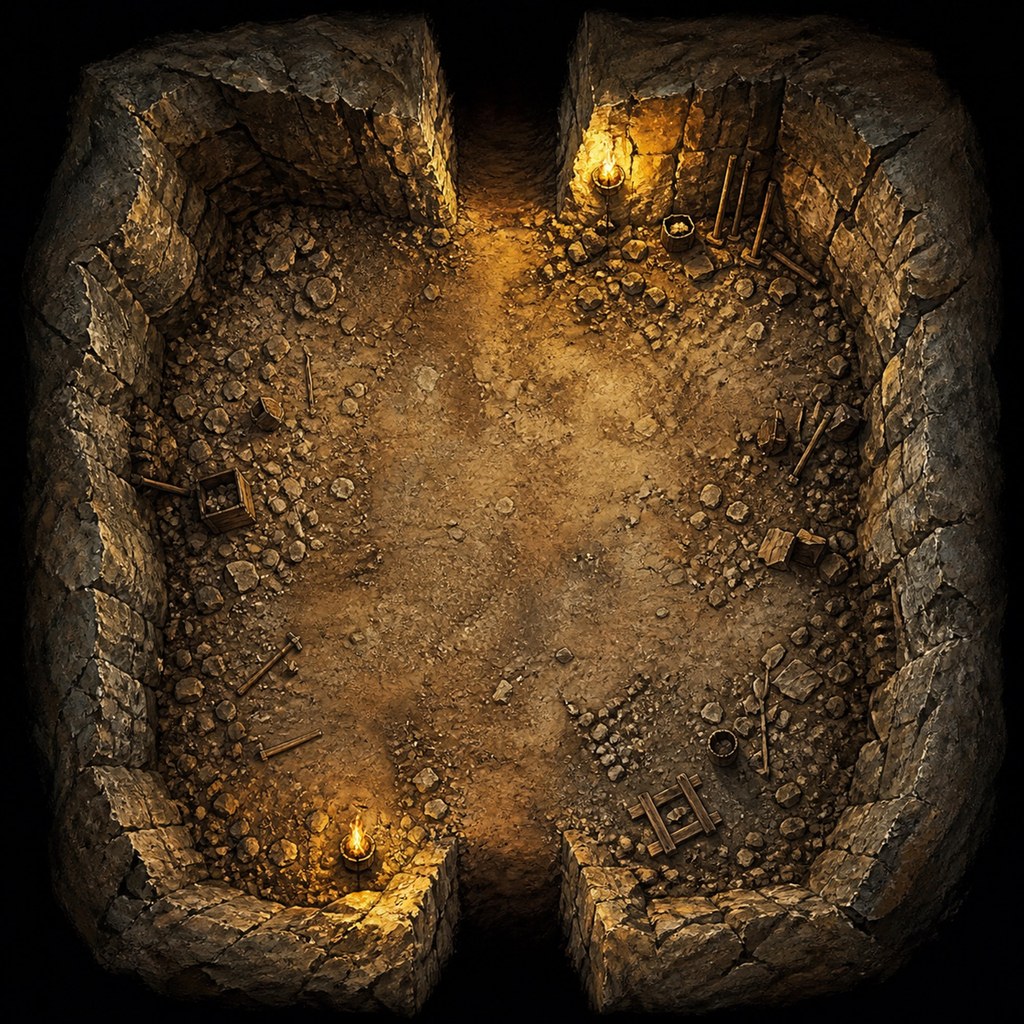
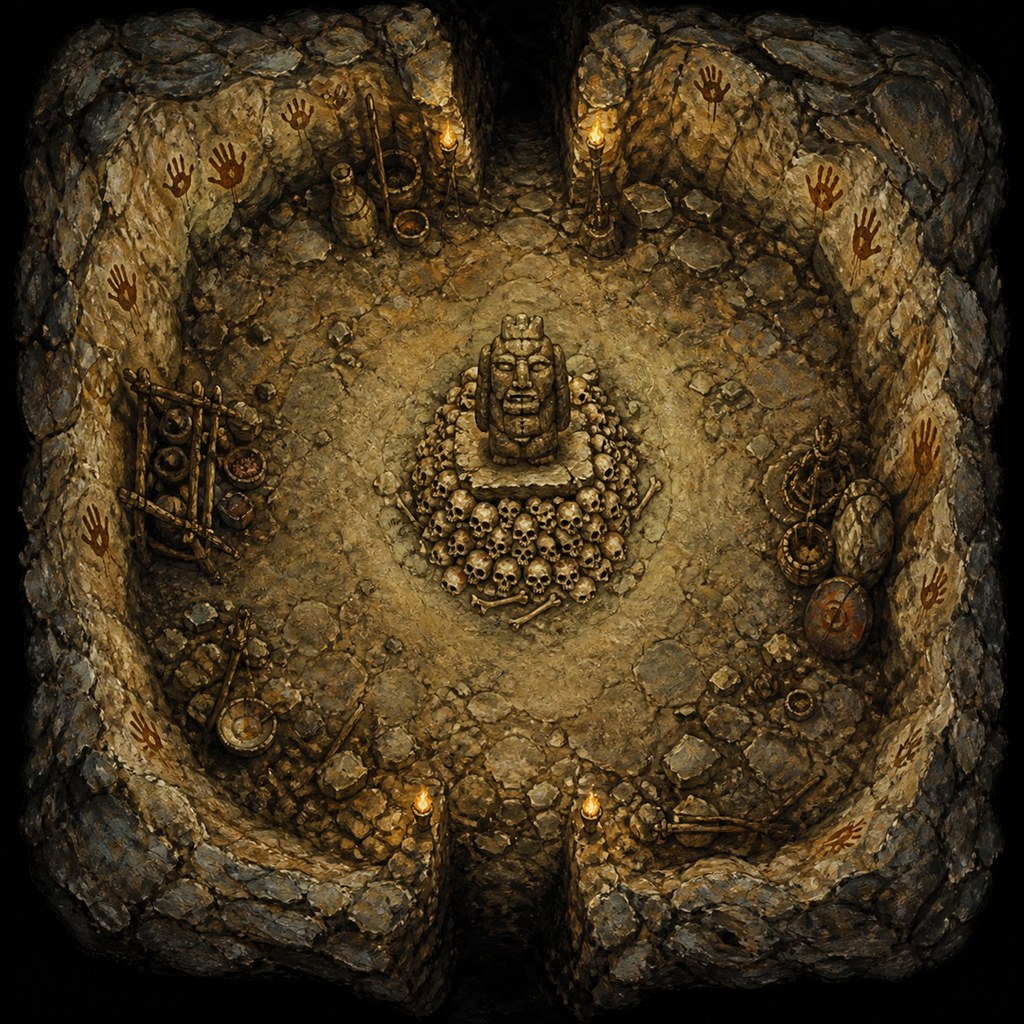
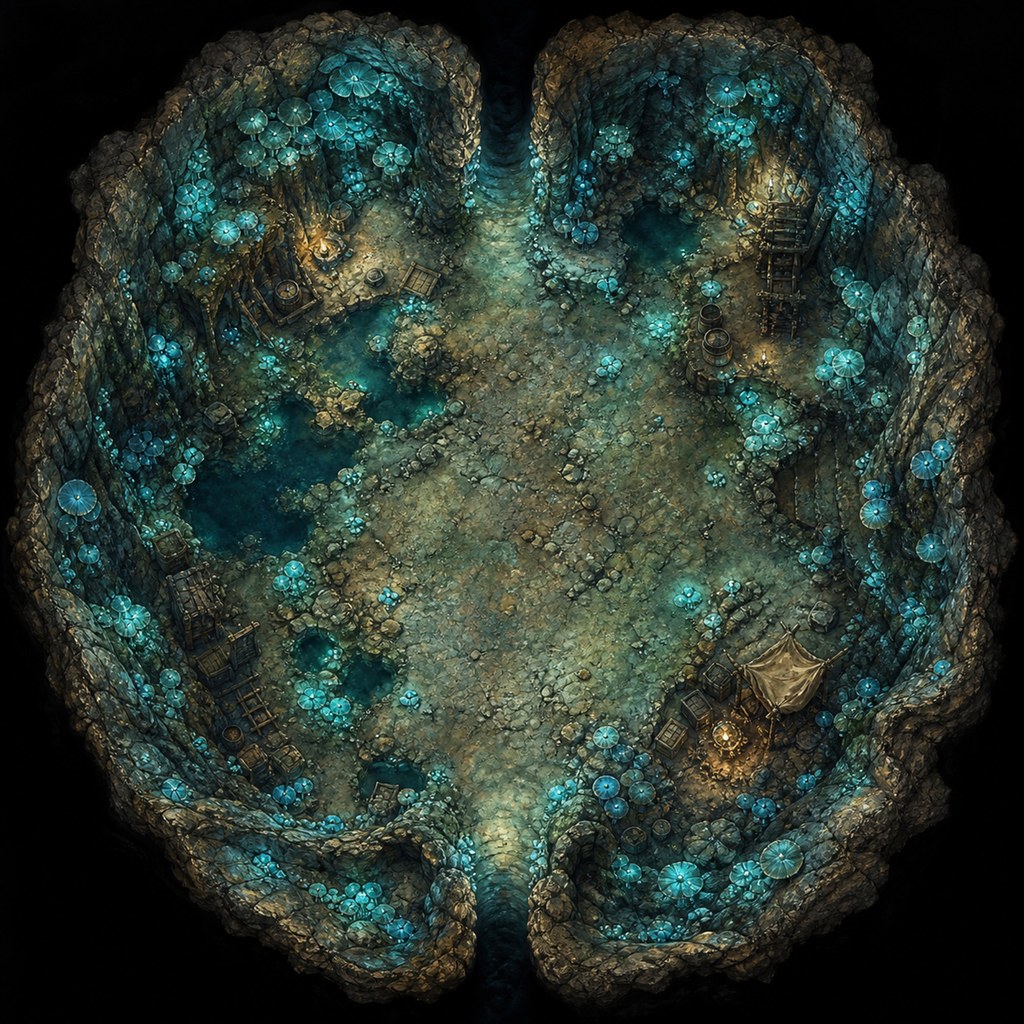
The Upper Workings look like a mine that is still being worked: timbered descents, a winch chamber, spoil galleries, a tool store. The Deep Workings are where the trolls actually live -- bone middens, cook fires, hide tents, a shrine. The Deeps stop looking like a mine at all. Glowing fungus, black water, cathedral vaults and old stonework that predates anything the trolls built.
Fighting Through a Dig
Combat in a dig works differently from combat anywhere else, and the differences matter.
You fight from the doorway
You do not walk into a room and then get attacked. You are stopped on the way in:
A Troll stands in your way.
Every attempt to move into the next room picks a defender out of it and puts you in combat, from where you are standing. You clear the room from the doorway, and only when the last defender is down does the passage actually open.
A useful consequence: the room you are standing in never blocks you. Only the room ahead does. And defenders engage in a set order -- the front line first, then the ones behind them -- so you are never fighting the whole room at once.
Disband your party first
Digs are instances, and instances do not accept party mechanics. Attack with a party active and you get:
You are approaching an instance but cannot attack as a party. Disband your party before attacking the instance (you can still do it together, just not using party mechanics).
That parenthesis is the important part. You can absolutely bring friends. You just cannot be formally partied while you do it. Disband, walk in together, fight together.
Cleared stays cleared
Dig rooms never repopulate. Not on a timer, not when you leave, not overnight. Every troll you kill in a dig is one fewer troll between you and the bottom, permanently.
This is what makes digs approachable at almost any level. You are never fighting the same room twice, so progress only ever accumulates. A character who cannot survive the Deeps in one go can still get there over a week.
Abandoned Miners' Camps
Scattered through the dig -- roughly two per descent, always between tiers -- are Abandoned Miners' Camps.
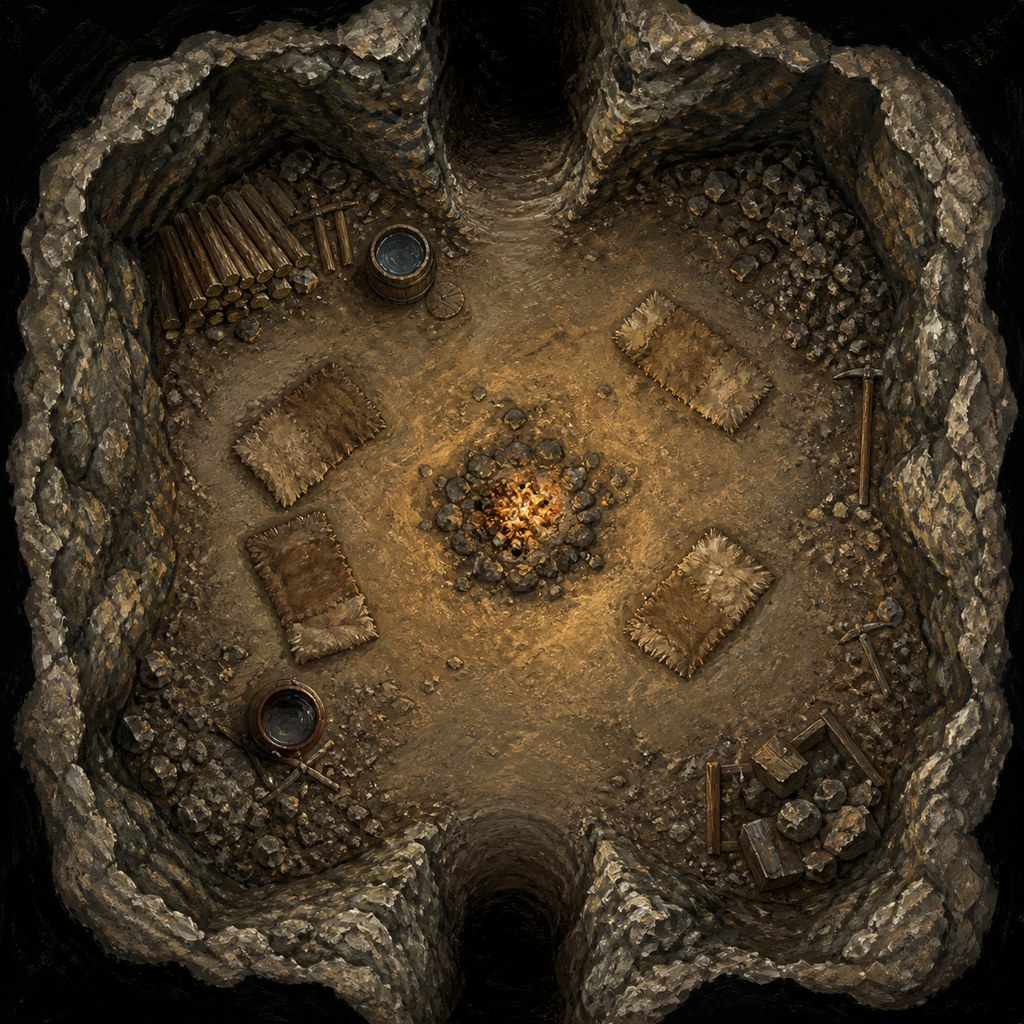
They contain no monsters whatsoever, and they are rest sites. You can sleep in them, back to full health, as often as you like. There is no cooldown, no cost, and no limit.
Combined with rooms that stay cleared, this is the whole strategy of a dig:
- Fight forward until you are hurt
- Walk back to the last Miners' Camp -- through rooms you already emptied, so the walk is safe
- Sleep to full
- Walk forward and take the next room
Repeat that and there is essentially no depth you cannot reach eventually. The limit on how deep you get is patience, not power.
Tip: when you find a camp, that is the moment to decide whether to push on. Everything past it is unexplored, and the walk back to safety only gets longer.
The Loot
Chests are the point. There are four kinds, and which one you find depends entirely on how deep you got.
| Chest | Found in | Typical haul |
|---|---|---|
 Spoil Pile Spoil Pile |
Upper Workings | ~4 items of junk |
 Troll Supply Crate Troll Supply Crate |
Upper & Deep Workings | ~6 items, some usable gear |
 Deep Cache Deep Cache |
Deep Workings & the Deeps | ~4 items, real equipment |
 Troll Hoard Troll Hoard |
The Troll Hoard room only | ~9 items, the best in the dig |
What is actually in them
Each chest rolls from one or two tables. Every entry is rolled independently, so these are not one-of-each lists -- and each table has a guaranteed item so no chest is ever completely empty.
Dig Scraps (Spoil Piles and Supply Crates) -- up to 3 items:
- Animal Hide -- 100%, 1-2 of them

Skull -- 30%

Rat Tail -- 55%, 1-3 of them
Dig Tools (Supply Crates) -- up to 2 items:

Blacksmith Hammer -- 15%

Light Wooden Shield -- 30%

Crude Wooden Hoe -- 30%

Small Wooden Club -- 35%
Troll Trinkets (Deep Caches) -- up to 2 items:

Leather Armor -- 20%

Crooked Shortspear -- 25%

Leather Cap -- 30%

Small Coin Pouch -- 100%
Deep Finds (Deep Caches) -- 1 item, and this is where the good things are:
- Saber of the Desert Troll -- 18%

Light Steel Shield -- 15%

Heavy Iron Mace -- 15%

Buckler -- 20%

Ruby -- 25%
The Troll Hoard rolls three tables at once -- a guaranteed coin pouch, four rolls on a plunder table (Ruby 35%, Buckler 30%, Saber of the Desert Troll 25%, Blacksmith Hammer 20%), and two rolls of leavings. It is comfortably the biggest single payout in a dig.
Why dig gear is better than it looks
This is worth knowing. When a chest generates a piece of equipment, it does not roll the item once. It rolls it 20 times and keeps the best one.
The practical effect is large: a Buckler out of a Deep Cache is, on average, a much better Buckler than one you would find anywhere else. Chest gear also arrives with its maximum durability set properly, so it is repairable rather than quietly broken.
Hardcore characters get hardcore items from dig chests, as they should.
One last thing: the server-wide rare item drop buff applies to dig chests. If the community has a rare drop buff funded and running, that is the time to be down a hole.
Updated 3 September 2026: chest contents were roughly doubled shortly after launch, and the quality reroll count was settled at 20 draws. The numbers above are the current ones.
Dead Ends and the Troll Hoard
Every dig ends somewhere, and there are six ways it can finish -- plus the depth ceiling.
| Ending | How often |
|---|---|
| The Troll Hoard | about 1 dig in 3 |
| Collapsed Face | about 1 in 6 |
| Ran out of depth at 12 rooms | about 1 in 6 |
| Abandoned Face | about 1 in 9 |
| The Bone Pit | about 1 in 11 |
| The Sealed Door | about 1 in 12 |
| Flooded Sump | about 1 in 17 |
Most dead ends are quiet. A collapsed rock face, a flooded sump, a sealed door nobody has opened. You will find a stray troll and not much else.
The Troll Hoard is not quiet.
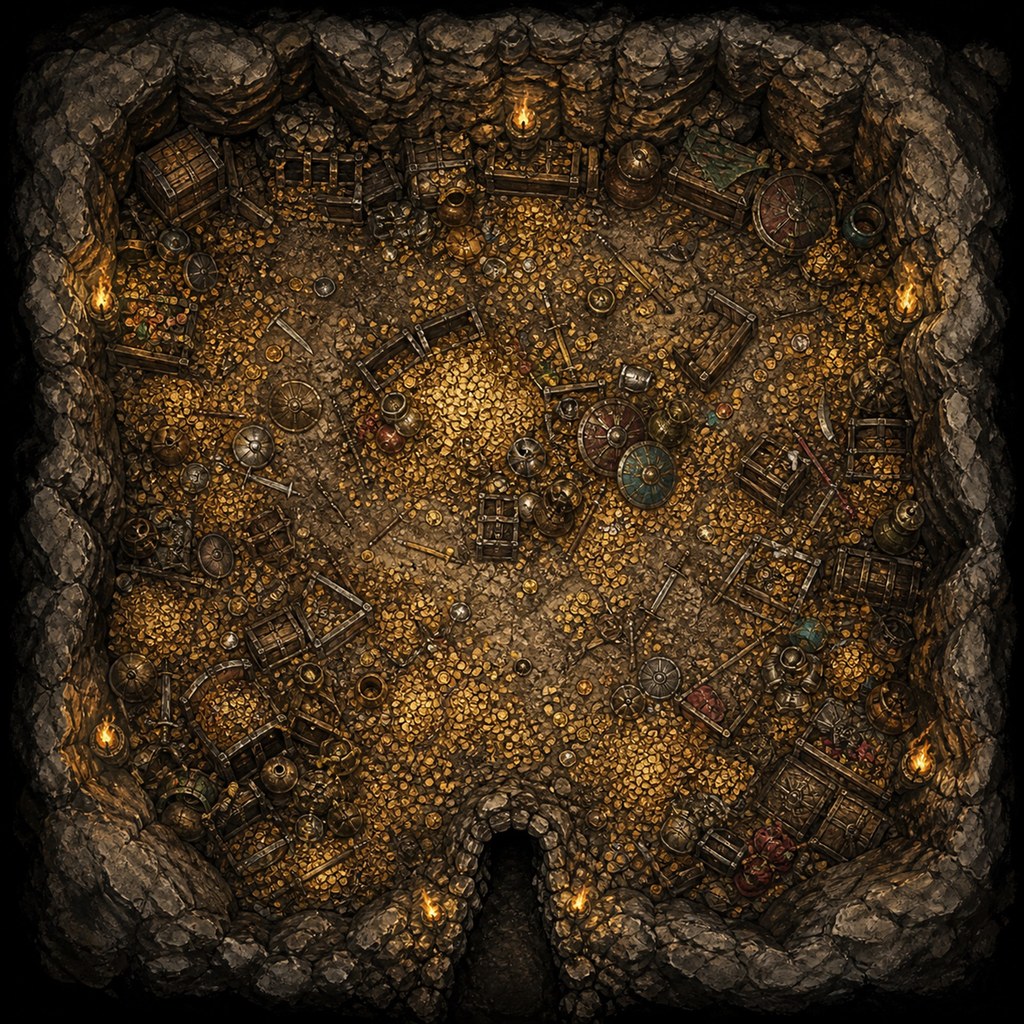
It is guarded by five Shell Trolls, three Troll Smiths and two Trolls -- by a distance the hardest room in the game's dig content -- and it holds the Troll Hoard chest. That is what you are hoping for when you keep pushing past the last Miners' Camp.
Roughly one dig in three ends there. Which is to say: keep going.
Twelve Things Worth Knowing
- Hunt in Aera Countryside. Five times the odds of anywhere else.
- Experimental UI or nothing. No 2D map, no entrance.
- Disband your party before you attack -- but do bring your friends.
- Look up from where you land. The entrance sits a few tiles above the centre.
- A dig is a place, not a run. Leave whenever you want; it keeps.
- Want a new layout? Find a new entrance. The old one is bound forever.
- Cleared rooms never come back. Every kill is permanent progress.
- Sleep at every camp. Free, unlimited, no cooldown.
- The walk back is safe. That is what makes retreating viable.
- Open every chest. Even a Spoil Pile is four free items.
- Run digs during a rare drop buff. It applies to chests.
- The Deeps are worth the trip. Deep Caches are where the real equipment is.
Go Find One
Troll Digs were built to give Initium something it did not have: a piece of the world that is different every time you look at it, but still hand-made everywhere it counts. Sixty-three rooms, all written and painted by hand, assembled into a dungeon that is yours.
Since launch, players have opened 91 digs and generated 740 rooms between them. Twenty-one of those digs have been pushed all the way to the twelve-room ceiling.
There is a hole in a hillside somewhere in Aera Countryside with your name on it. Go and find it.
If you are new to fighting in Initium, the combat mechanics guide covers the basics you will need down there. And if you come back up with materials you do not recognise, the invention system guide explains what to do with them.