Combat Mechanics: A Complete Guide
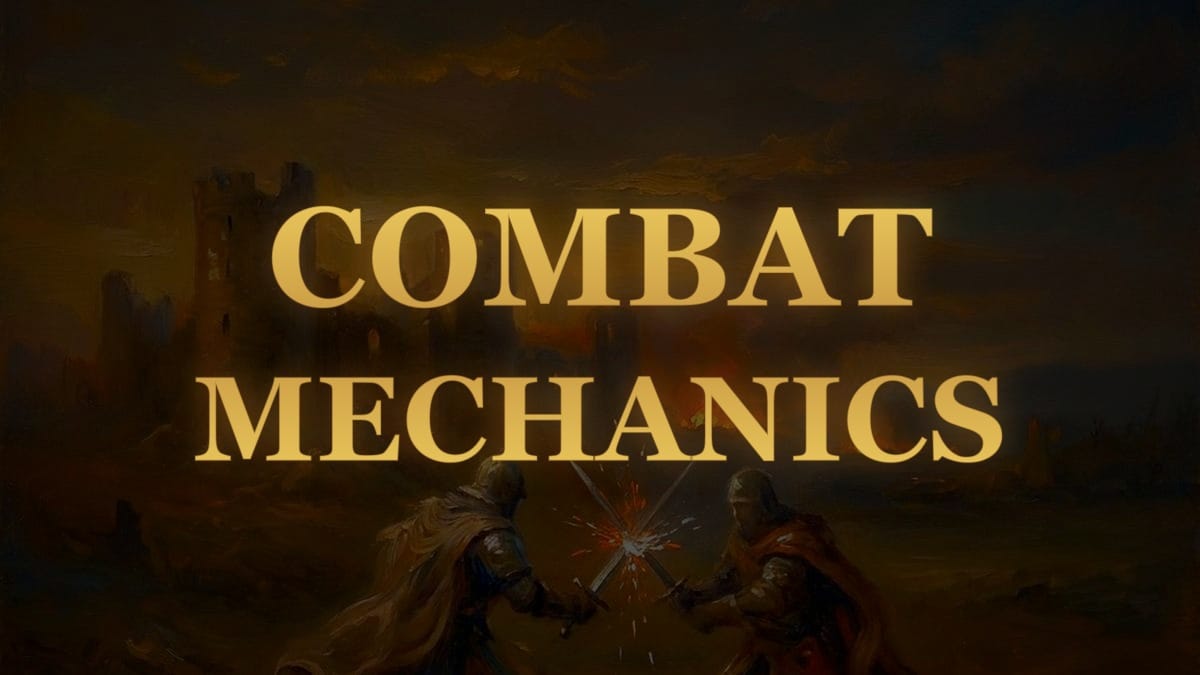
Combat is the beating heart of Initium. Whether you are cutting down kobolds in the Aera Countryside or standing shoulder-to-shoulder with allies against a towering raid boss, understanding how the fight actually works is the difference between glory and a long walk back from the grave. This guide breaks down every layer of the combat system so you can make smarter choices about gear, stats, and tactics.
The Dexterity Duel: Hit or Miss
Every attack begins with a contest of Dexterity. Both attacker and defender roll a random number between zero and their current Dexterity score. If the attacker rolls equal to or higher than the defender, the attack connects. If not, it is a clean miss.
This means Dexterity is not just an offensive stat -- it is your primary defense against incoming hits as well. Heavier armor often carries a Dexterity penalty (a percentage reduction to your total Dex), so there is a real tradeoff between blocking power and dodge chance. A nimble rogue in light gear might avoid hits entirely, while a plate-clad knight absorbs them through armor.
Tip: Your effective Dexterity can never drop below 2, no matter how many penalties stack up. Even the heaviest armor will not make you completely helpless.
Weapons: Dice, Damage, and Types
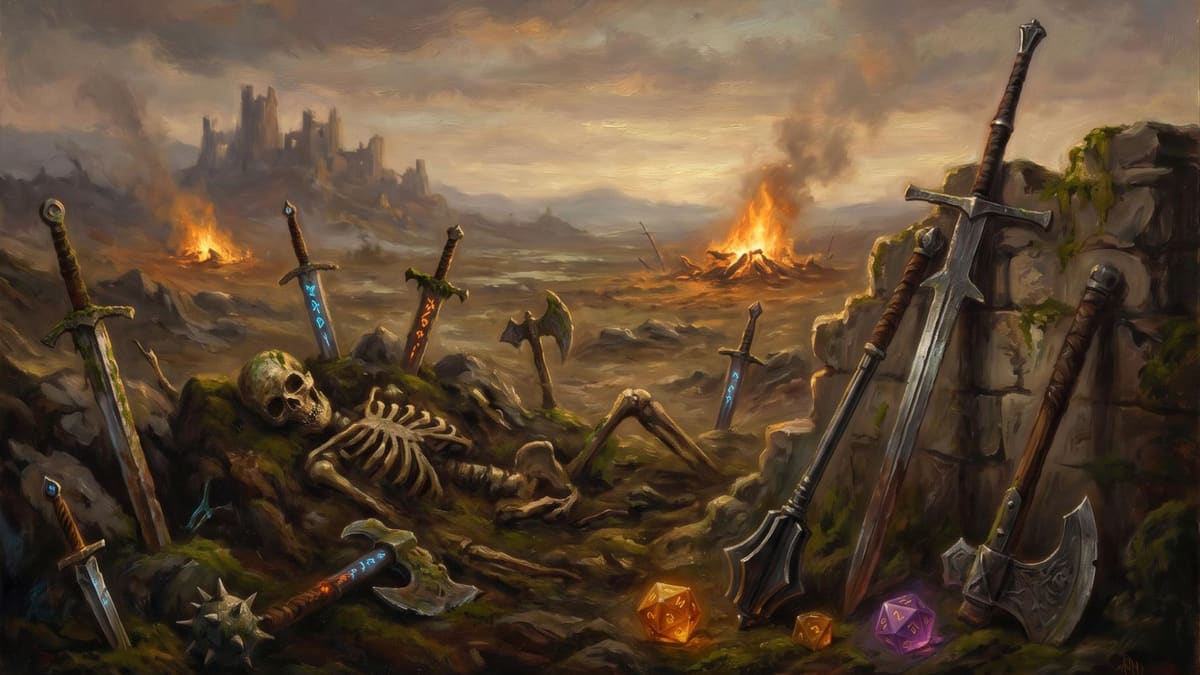
Weapon damage is expressed as a dice roll. A 1d6 weapon rolls a single six-sided die, dealing 1 to 6 damage. A 3d10 weapon rolls three ten-sided dice for 3 to 30 damage. More dice means more consistent damage (clustering toward the average), while fewer dice means wilder swings.
The Three Damage Types
Every weapon deals one or more of three physical damage types:
- Bludgeoning -- blunt force from maces, hammers, and fists
- Slashing -- cutting edges from swords, axes, and claws
- Piercing -- pointed strikes from spears, daggers, and arrows
Some weapons deal multiple types. A Macuahuitl, for example, deals both bludgeoning and piercing damage. When a multi-type weapon hits armor, the game automatically picks whichever type is most effective against that particular piece of armor. This makes versatile weapons excellent against varied enemies.
Strength Bonus
On top of the dice roll, your Strength adds bonus damage to every hit. The higher your Strength above the base of 3, the more bonus damage you deal, with some random variance per swing.
Two-handed weapons get a 50% bonus to strength damage compared to one-handed weapons. This is the core tradeoff of two-handers: you sacrifice a shield (and its blocking ability) for significantly higher damage output per hit.
Critical Hits and Intelligence
After a hit connects, the game rolls to see if it is a critical hit. Your critical chance comes from two sources:
- The weapon's base critical hit chance (a property of the weapon itself)
- An Intelligence bonus: every point of Intelligence above 4 adds 2.5% critical chance
For example, a character with 10 Intelligence wielding a weapon with 5% base crit chance would have: 5% + (10-4) x 2.5% = 20% critical chance.
When a critical hit lands, the weapon's base dice damage is multiplied by the critical multiplier (default 2x, though some weapons have different multipliers). Importantly, the Strength bonus is added after the multiplier, not multiplied with it. This means crits reward high base weapon damage more than raw Strength.
Dual Wielding: Double the Danger
Equipping a weapon in each hand unlocks a powerful mechanic. After your primary attack, your offhand weapon gets a chance to deliver a free second attack in the same turn. The chance of this triggering is equal to your critical hit chance (weapon crit% + Intelligence bonus).
When it fires, the offhand attack is a complete, independent hit -- it rolls its own damage, can crit on its own, and is resolved separately. In effect, you are attacking twice in one turn. Combined with high Intelligence for better trigger rates, dual wielding can be devastating.
The tradeoff? No shield means no shield block rolls, leaving you more reliant on armor and Dexterity for defense.
Armor and the Blocking System
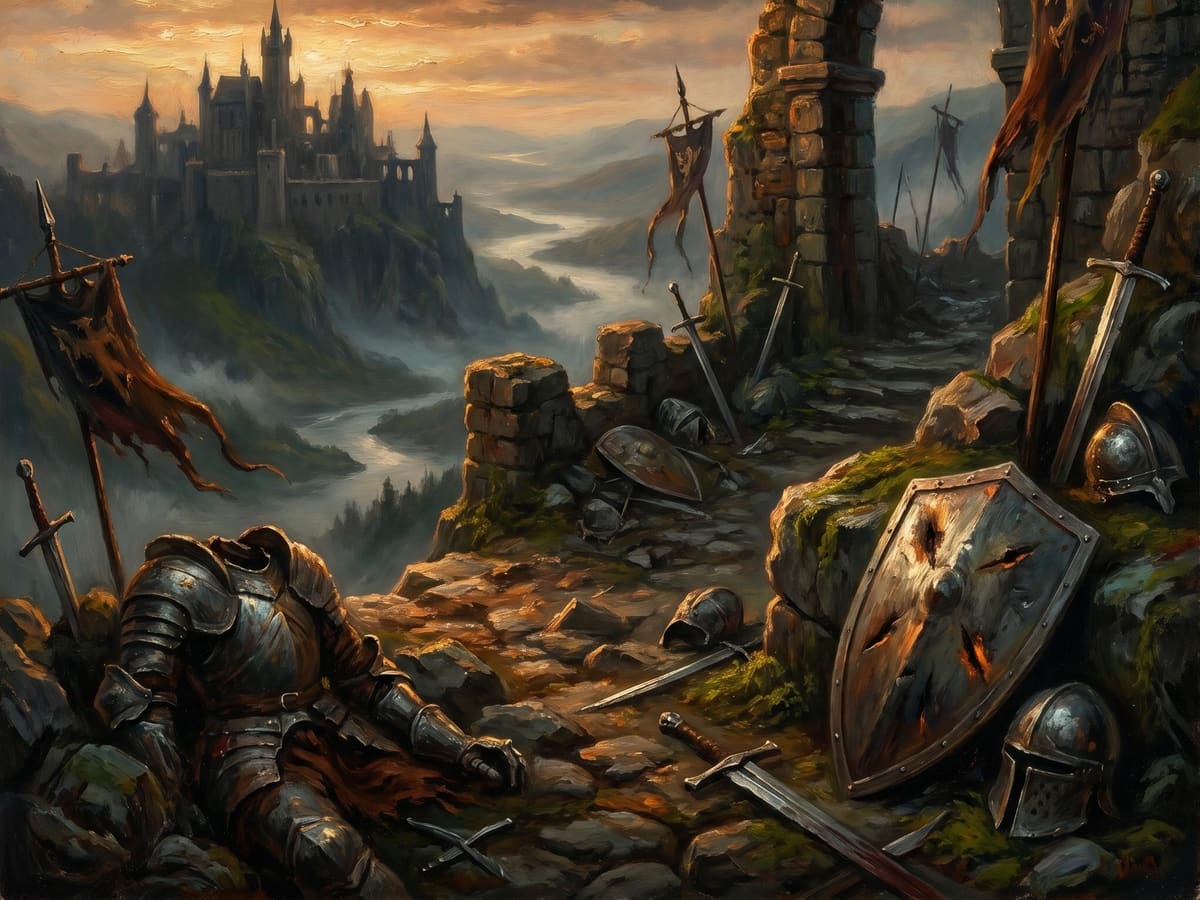
Initium's armor system has real depth. When an attack hits, the game goes through a layered defense check:
Step 1: Hand Equipment Blocks First
Shields and weapons in your hands roll their block chance before any body armor is checked. A shield with 30% block chance gets that roll regardless of where the attack would land. Two-handed equipment rolls its block chance twice independently (two separate 30% rolls, not one 60% roll).
Step 2: Body Part Targeting
If the hand equipment does not block, the game randomly picks a body part:
- Chest/Shirt: 50%
- Legs: 30%
- Head: 10%
- Hands: 5%
- Feet: 5%
If the targeted slot has no armor equipped, the hit goes through at full damage. If armor is present, it rolls its own block chance.
Step 3: Damage Type Effectiveness
This is where gear choices get strategic. Every piece of armor has a blocking capability rating for each damage type -- Bludgeoning, Slashing, and Piercing. These ratings multiply the armor's base Damage Reduction:
- Excellent: 2x damage reduction (double protection)
- Good: 1.5x damage reduction
- Average: 1x damage reduction (baseline)
- Poor: 0.75x damage reduction
- Minimal: 0.5x damage reduction (half protection)
- None: 0x -- the block fails entirely
A Full Plate with 20 base Damage Reduction and "Excellent" Bludgeoning blocking would reduce a mace hit by 40 points. But if that same plate has "Minimal" Piercing blocking, a spear would only be reduced by 10. Knowing what damage types your enemies deal -- and matching your armor to counter them -- is a huge tactical advantage.
Remember: armor has durability. Every successful block costs 1 durability. When it hits -1, the armor is destroyed. Keep spares or be ready to replace gear after long fights.
Advanced Combat Effects
Beyond the core hit-block-damage loop, several special modifiers can appear on weapons and armor:
- Poison Damage: Applies a damage-over-time effect that persists for 90 seconds, ticking additional damage each combat action. Stacks from equipment modifiers.
- Life Steal: Heals the attacker for a flat amount on each hit, up to their maximum HP. Sustain in long fights.
- Damage Reflection: When you are hit, a flat amount of damage is reflected back to the attacker. This triggers regardless of whether your armor blocked. Punishes aggressive enemies.
- Bonus Critical Damage: Adds extra damage on critical hits beyond the base multiplier.
These effects come from equipment modifiers and buffs. Hunting for gear with the right combination of these effects is part of what makes Initium's loot game compelling.
Death Is Not the End
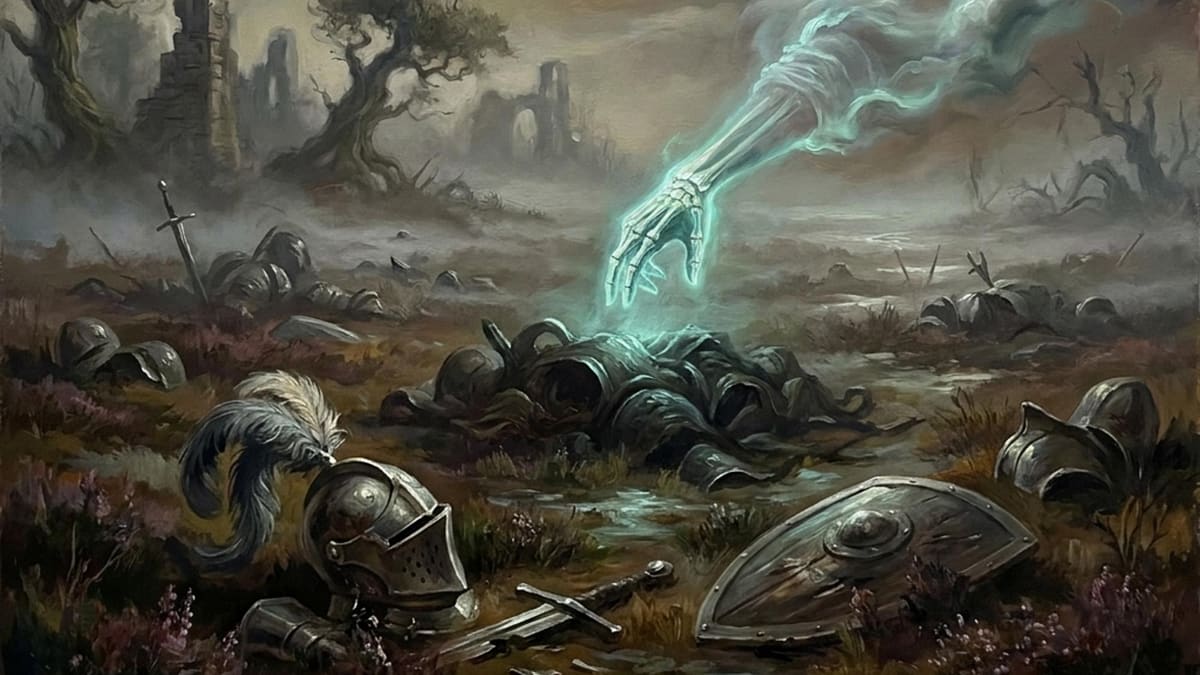
When your hitpoints drop below 1, you do not simply respawn. You fall unconscious on the battlefield. Your fate depends on what happens next.
While unconscious, there is a periodic chance of dying permanently -- the further below zero your HP, the higher the risk. But you also have a chance of being rescued. Premium members can find your unconscious body, pick you up, and carry you to a rest site (an inn, camp, or house) where you will revive with 1 HP.
The stakes are real: when you fall unconscious, all your equipment drops on the combat site. Other players can find and take it. This is why veteran players always keep backup gear stored safely in their houses.
Ultimate subscribers have one additional perk: they can use their own alternate characters to rescue their fallen ones. For everyone else, rescue requires the help of another player.
Pro tip: Buy a house from any major city's Town Hall for 2,000 gold. It is cheap insurance -- premium players never forget house paths on death, so you will always be able to get back to your stored gear.
Parties and Raid Bosses
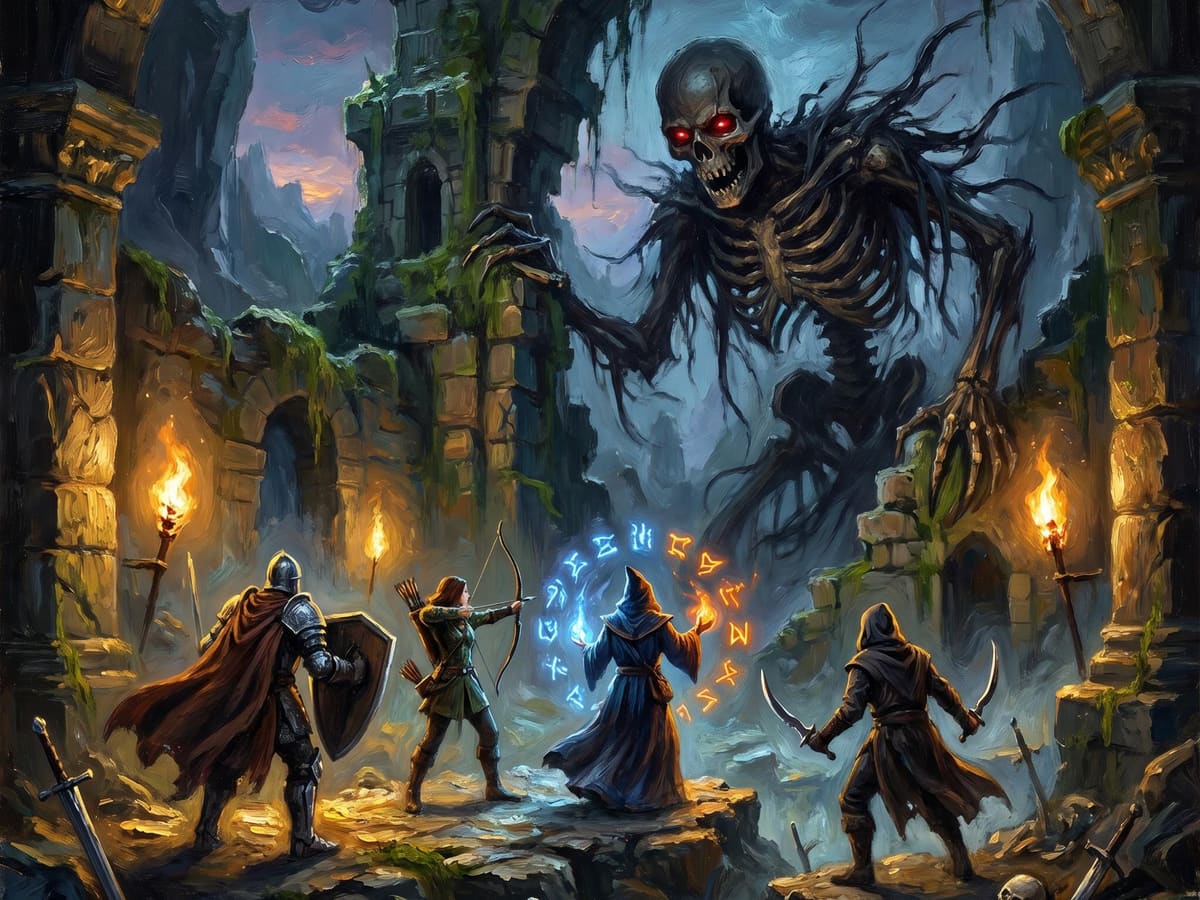
You can party with up to 3 other players. The party leader controls movement and exploration, and when the leader encounters a monster, all party members enter combat together. Each member can attack independently, but the monster counter-attacks after every hit -- so coordinating who strikes and when matters.
Only the party leader can flee. Other members must leave the party first if they want to escape. If the leader dies, leadership passes to the next member.
Raid Bosses
Periodically, unique raid bosses appear in the world -- massive creatures with far more hitpoints than any single character can handle. These require the cooperation of the entire server. Raid bosses often drop unique equipment that cannot be obtained any other way, making them some of the most exciting events in the game.
Keep an eye on global chat for raid announcements -- or be the first to stumble on one while exploring.
The Full Attack Sequence
Here is exactly what happens on every attack, step by step:
- Dexterity Contest: Attacker and defender each roll 0 to their Dexterity. Attacker must roll equal or higher to hit.
- Critical Check: Roll the weapon's crit chance (+ Intelligence bonus). If critical, weapon damage is multiplied.
- Hand Equipment Block: Shields and hand weapons roll their block chance. If blocked, damage reduction applies (adjusted by damage type effectiveness).
- Body Part Selection: Random body part targeted (Chest 50%, Legs 30%, Head 10%, Hands 5%, Feet 5%).
- Armor Block: If armor covers the targeted body part, it rolls its block chance. Damage reduction adjusted by damage type effectiveness.
- Damage Applied: Remaining damage (after all reductions) is dealt to the defender.
- Dual Wield Check: If the attacker has an offhand weapon, roll for a bonus second attack using the same crit chance.
- Special Effects: Poison, life steal, and damage reflection are resolved.
- Counter-Attack: The defender gets to attack back, following the same sequence.
There Is So Much More
Combat is just one layer of Initium. Beyond the battlefield, there is a deep invention and crafting system where you experiment with materials to discover new items. There are player-run economies with resource gathering, trading posts, and storefronts. Guilds wage territorial wars with blockades and defense structures. And the world itself rewards exploration -- hidden paths, secret locations, and rare encounters await those who venture off the beaten track.
This is a living world shaped by its players. Pick up a sword and start shaping it.